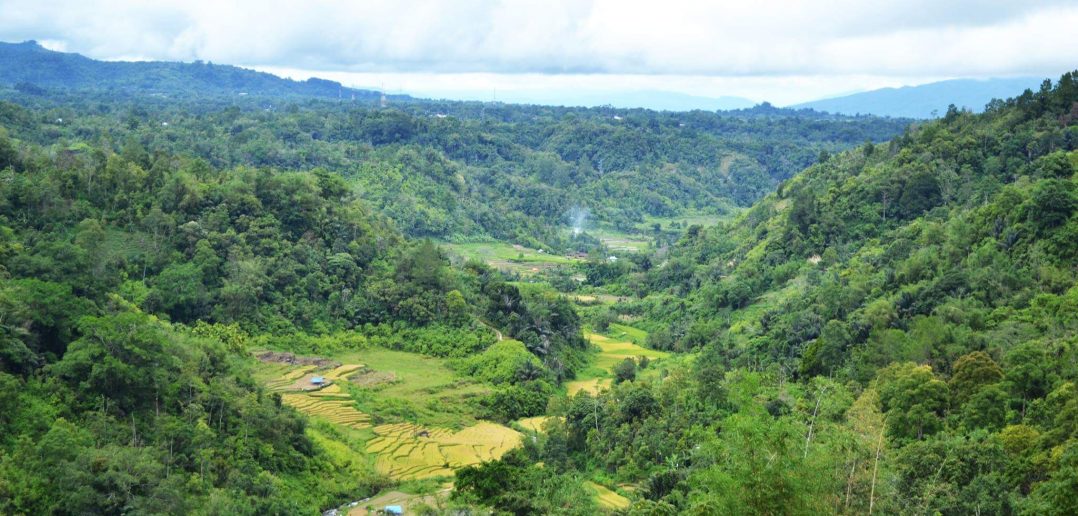
Sumatra is an Indonesian island, one of the largest Islands in the world and lies close to mainland Asia. Its long axis runs about 1800 km (1110 miles) and its widest point is about 435 km (270 miles). The equator cuts across its centre. The Bukit Barisan mountain range lies on the western side of Sumatra, made up primarily of volcanoes and surrounded by large areas of forest and jungle. Large areas of swampy plains lie to the east.

Sumatra was at one time known as Swarnabhumi, Sanskrit for land of gold, and to this day gold panning takes place by hopeful adventurers. It has been known by many names and the first recorded mention of the name Sumatra was the Srivijayan Haji – Sumatrabhumi (King of Sumatra)
The fertile areas support a rich variety of plant and animal life, rice, vegetables, coffee and spices such as cinnamon are abundant. As elsewhere on the planet there is a desperate struggle against deforestation and loss of plant and animal species. The West Sumatran tiger, rhinoceros, elephant and orangutan are all critically endangered.

The power of nature is evident nevertheless. Volcanic eruptions, earthquake and tsunami are part of what has formed and influences this region and my experience of West Sumatra is that the life force within nature is palpable and deeply nourishing. The struggle to find some balance between human activity and development with the rest of nature continues.
There are over 50 million people in Sumatra with at least 50 languages spoken. Islam is the predominant religion. West Sumatra is home to the Minangkabau people who are known for their matrilineal culture, their love of learning, religion and culture. In almost all styles and discussion of Penjak Silat, the Silek of the Minangkabau is renowned.