Fight Scenes from the Mahabharata
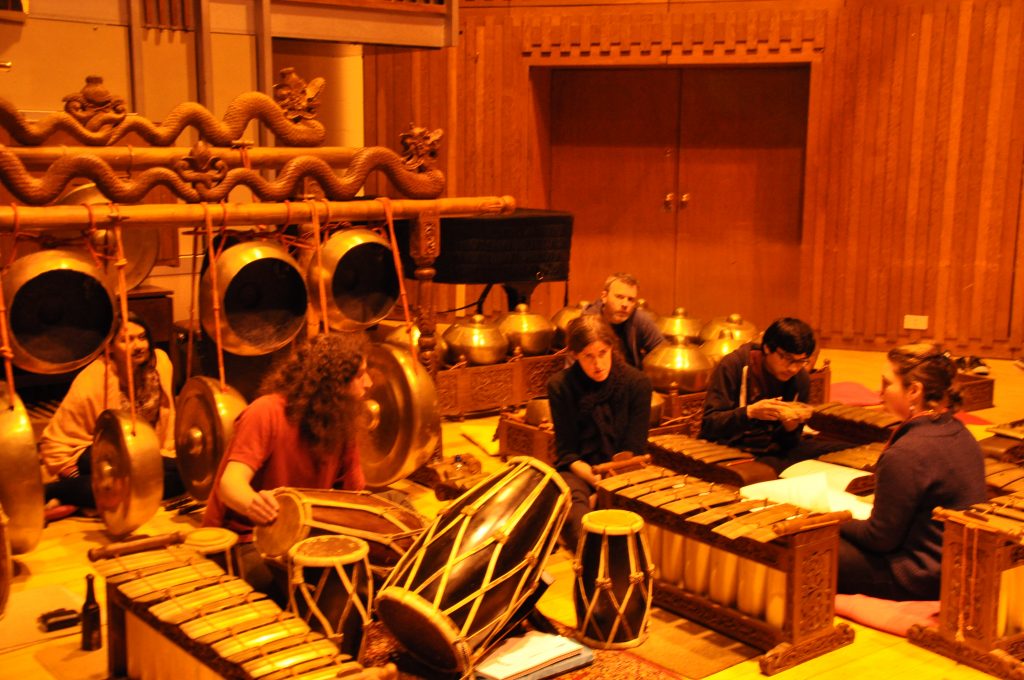
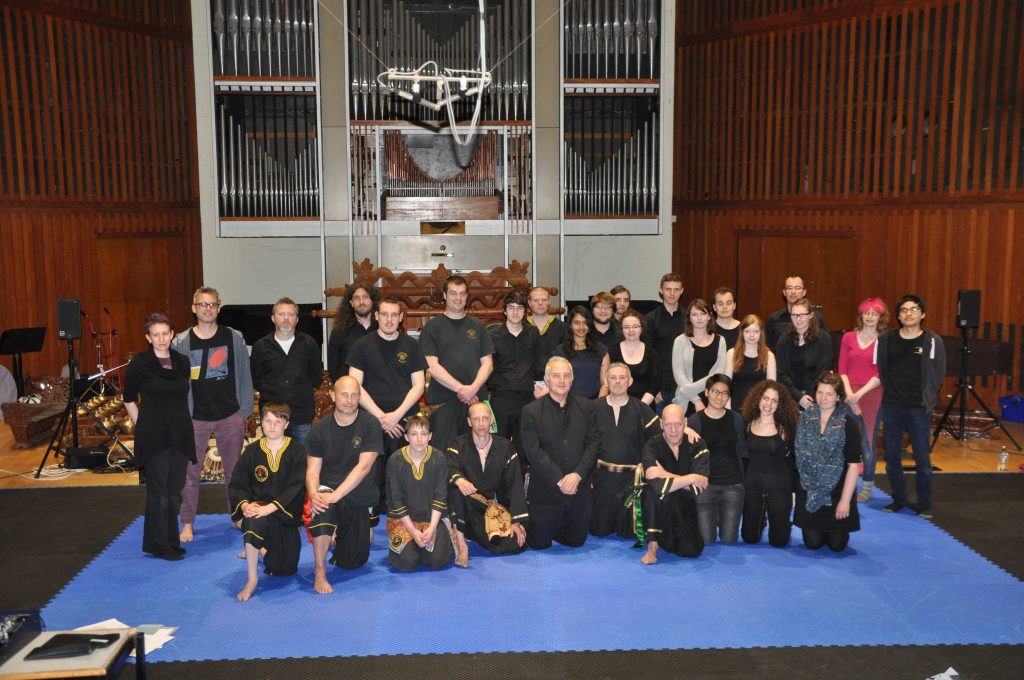
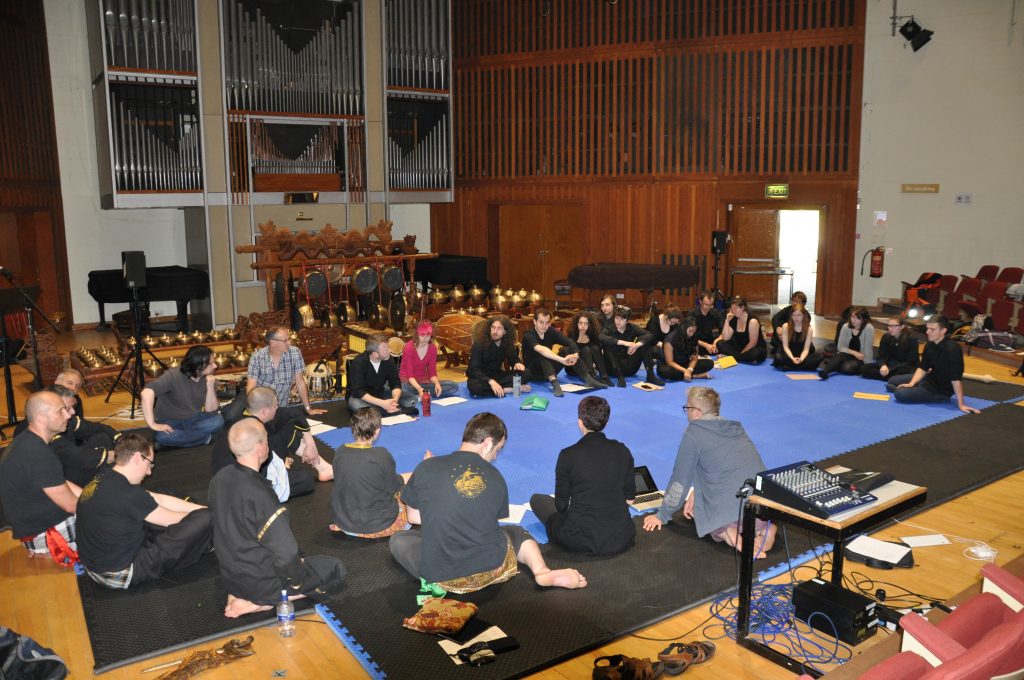
In 2014 the Yorkshire Silat Academy and Gamelan Sekar Petak combined to perform Fight Scenes from the Mahabharata. This was put on at The Jack Lyons Concert Hall on 4th June and was a single performance. This was really challenging and a marvellous creative experience for all concerned. The music was arranged, written and performed by Gamelan Sekar Petak and the fight choreography by the Yorkshire Silat Academy. This performance was inspired by the participants study and practice of arts from Indonesia, India and Malaysia, in particular the musical traditions of Java and the martial styles of the Minangkabau people of West Sumatra.
One of the principal themes of this website is cooperation and conflict. My hope is that the performance raised questions about this theme and highlighted the many difficulties of living in a world that is riven by creativity, beauty and violence. The practice of martial arts and indeed all of the arts is a transformative process. My own experience of this night was intensified by a violent family tragedy that had just taken place.
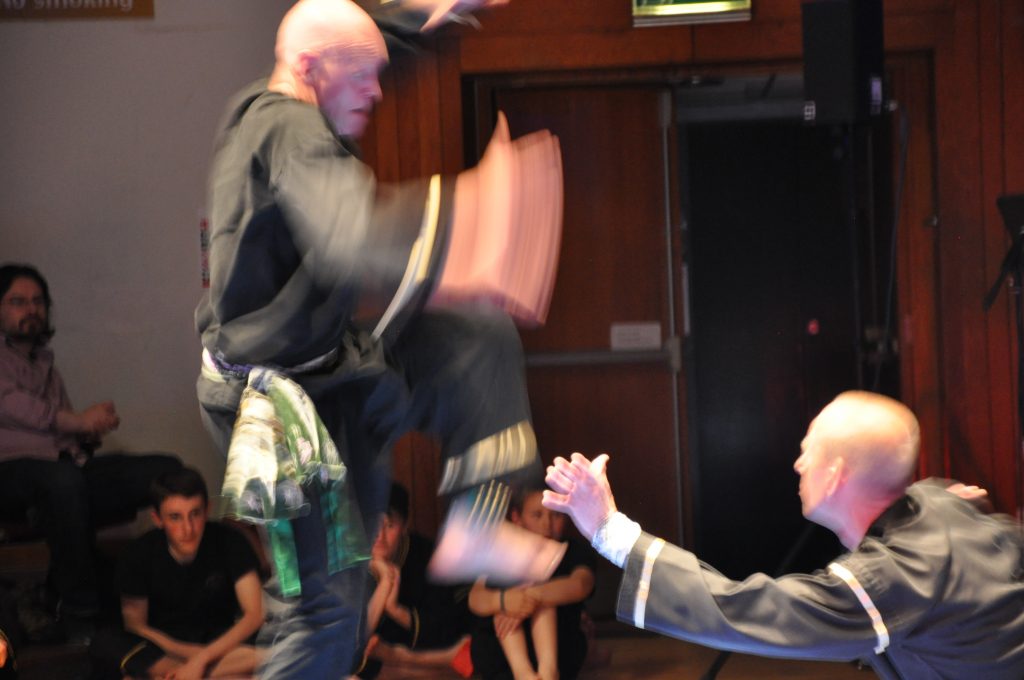
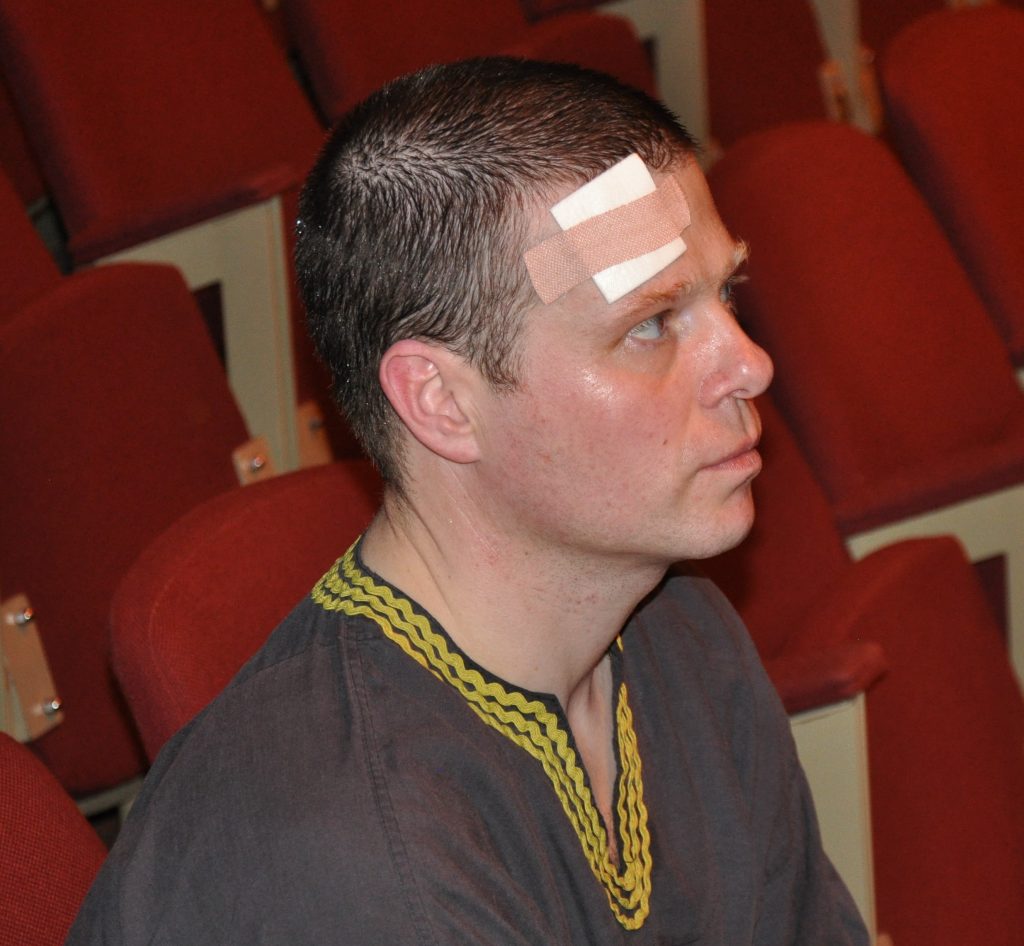
My thanks to all involved and in particular to my grandson Brandon Paylor who took some wonderful photographs and to Charlotte Pugh, one of the gamelan musicians who has worked with the film and music to provide some excerpts of the performance.

Programme Notes :
The Mahabharata is one of the two great Hindu epics, the other being the Ramayana. Its earliest origins may be traced back as far as the 8th or 9th BCE, though it began to emerge in its current form as a coherent epic around 400CE. The same period saw Hindu influence from India spread across the Malay Archipelago, thanks to which both the Mahabharata and the Ramayana remain popular narratives in java today, often being represented in shadow puppet plays and other dramatic forms.
The culture of India in which the Mahabharata came to maturity was dominated by the caste system (which remains relevant today, despite being officially outlawed by government). In the broadest sense, there are four castes: Brahmins (priests and scholars), Kshatriyas (warriors and rulers), Vaishyas (farmers and merchants) and Sudras (servants) – though many sub castes exist. The Mahabharata is very much a Kshatriya text: it explores at a fundamental level issues that were relevant to those whose lot it was to rule and fight. In particular, it explores the question of dharma. There is no direct English translation of this word, though it relates to morality, law, duty, doing what is right and to a certain extent, fate, in that it involves fulfilling the role that falls to one by birth or circumstances. When it comes to warriors, dharma can lead to confusing, conflicting imperatives. Killing or inflicting pain upon another human being is universally condemned, yet every society seems to sanction it in certain situations, such as punishing a wrong doer, protecting a community or expending/defending a territory.

Many of the characters portrayed in the Mahabharata- most notably Yudhisthira (oldest of the Pandhavas and son of the God Dharma) – are keen to avoid the increasingly inevitable conflict, instead seeking compromise or even considering capitulation; despite all the wrongs done to him, Yudhishthira expresses a preference for leading the life of an ascetic in the forest to engaging in war with his own cousins. Considered from one perspective, the overarching message of the Mahabharata seems to be that it is a warriors dharma to fight, to take action to punsh wrongdoing and restore justice and balance, even if it involves killing ones own family and friends.
This perhaps marks the most important difference between the tragedy, that is the Mahabharata- in which an entire generation of Kshatryias are all but wiped out- and Greek tragedies. In Sophocles dramas for instance, one has the impression that fate is utterly inevitable; once the action is set in motion, the hapless characters are no more able to change the course of events than ball bearings in a chase. In the Mahabharata, the key characters have hundreds of opportunities to avert war, to make different choices, to listen to sound advice, to apologise, compromise, negotiate and forgive. In a way it is their inaction that leads to the war (driving home, perhaps, Krishnas advice to Arjuna in the Bhagavad Gita that it is a Kshatriyas dharma to act, regardless of the outcome of his actions- a demand to withhold moral judgement that has been made of soldiers since time immemorial).
Most notable in this regard is the pivotal scene of the dice game in which Yudhishthira gambles away his fortune, his brothers, himself and his wife. When Draupadi is dragged before the court by her hair, she sets a dilemma before the assembled nobles. Since her husband had gambled and lost himself before staking her, he was already Duryodhanas slave, and a slave cannot own property. Thus she was no longer his wife and he did not have the right to gamble her: the bet was void. She repeatedly asks the wise elders of the court to give judgement upon this matter and decide whether or not she legally belongs to Duryodhana. Despite the great wisdom of the court elders, none care to offer an opinion, instead shuffling their feet and muttering that it is a difficult issue of dharma, that both arguments have validity, and so on.
This situation, along with the ongoing failure of Duryodhanas father, blind Dhrtarastra, to put an end to the increasingly horrific farce of the gambling match – which culminates in Duryodhanas’s brother attempting to strip Draupadi naked in front of an impassive court – is very difficult to understand without taking a step back to consider the Mahabharata from a broader perspective. As the narration alludes to, the great war of the Bharatas is, on a cosmic level, the response of the supreme god Vishnu to a plea from the earth, who finds herself overburdened with greedy and destructive humans.

Conceived of as a monumental sacrifice, initiated and carried out by the gods, the nature of fate in the Mahabharata falls into place. The characters are not passive mortal puppets, subject to preordained tragedy; they are all incarnations and descendants of the gods themselves. The divine parentage of the Pandhavas (vis Kunti’s mantra) is made very apparent, but less obvious is that the unambiguously evil Duryodhana is also descended from a god. It was Shiva, God of destruction, who promised his mother her hundred sons, and Duryodhana himself is in fact an incarnation of kali, Shiva’s violently destructive female aspect. The wise elders of the court who refuse to adjudicate on Draupadis case also bear divine origins. Even Vishnu, the supreme being, takes mortal form as Krishna, ‘the stirrer of men’s hearts’, who drives the action forward, advising the Pandhavas to forsake morality and contravene the rules of engagement in order to win the war, regardless of the cost. All have manifested upon the earth to bring about the great sacrifice. Thus while the characters appear to act as if they are trying (ineffectually) to avert war, they are all, regardless of whether they realise it or not, actively driving events towards the final blood-drenched carnage.
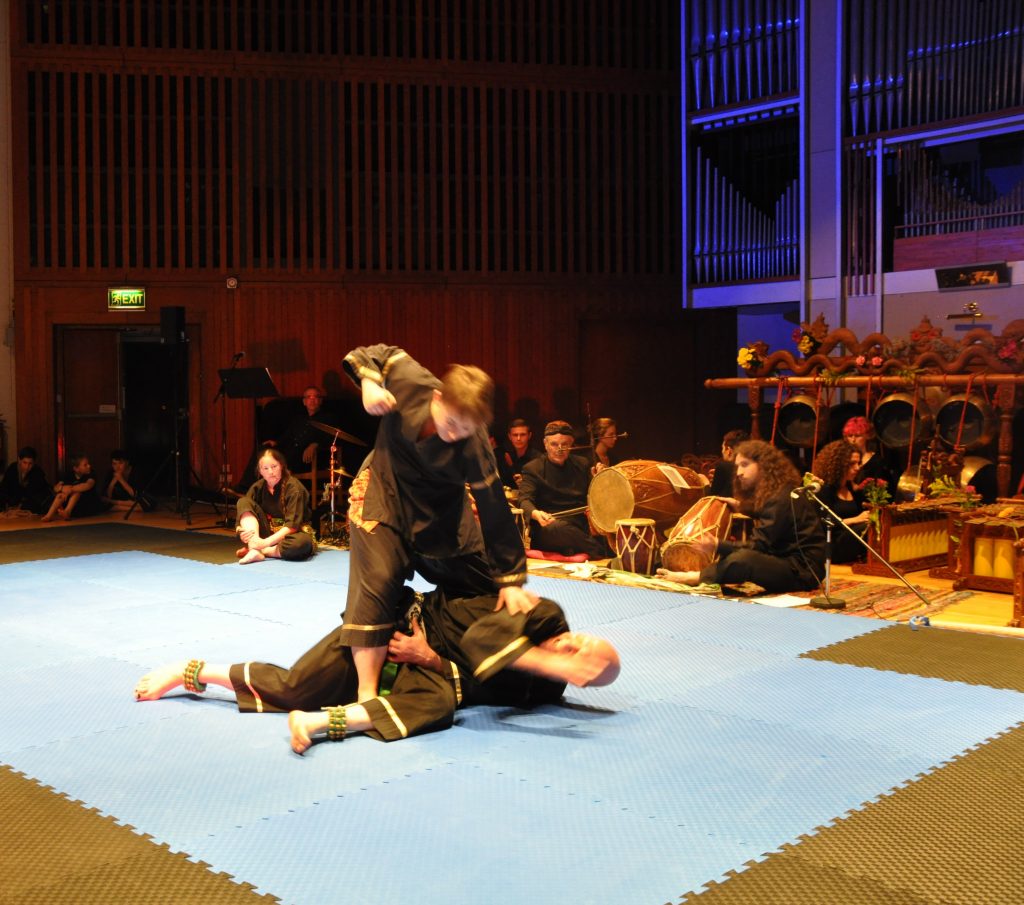

We hope that the scenes collaboratively selected for tonight’s performance reflect moral ambiguities of war and the conflict between doing one’s ‘duty’ and doing what is ‘right’ – an apt issue to ponder on the 100th anniversary of Europes own Great War. To weave together a coherent narrative from these fragments, it has been necessary to simplify the story vastly, to cut out a host of characters and occasionally assign actions to different characters. We hope that any knowledgeable students of the Mahabharata in the audience will forgive such transgressions.
Ginevra House
Gamelan and Penjak Silat or Silek are traditional Indonesian arts, musical and martial. They are not widely practiced in the UK and so it seemed a happy and fortuitous coincidence that the Gamelan Sekar Petak based at York University and the Yorkshire Silat Academy in Knaresborough were so close to each other. A joint project was proposed and has quickly come together in a wonderfully organic and democratic way. Everyone has found their own place with great initiative and remarkable cooperation.
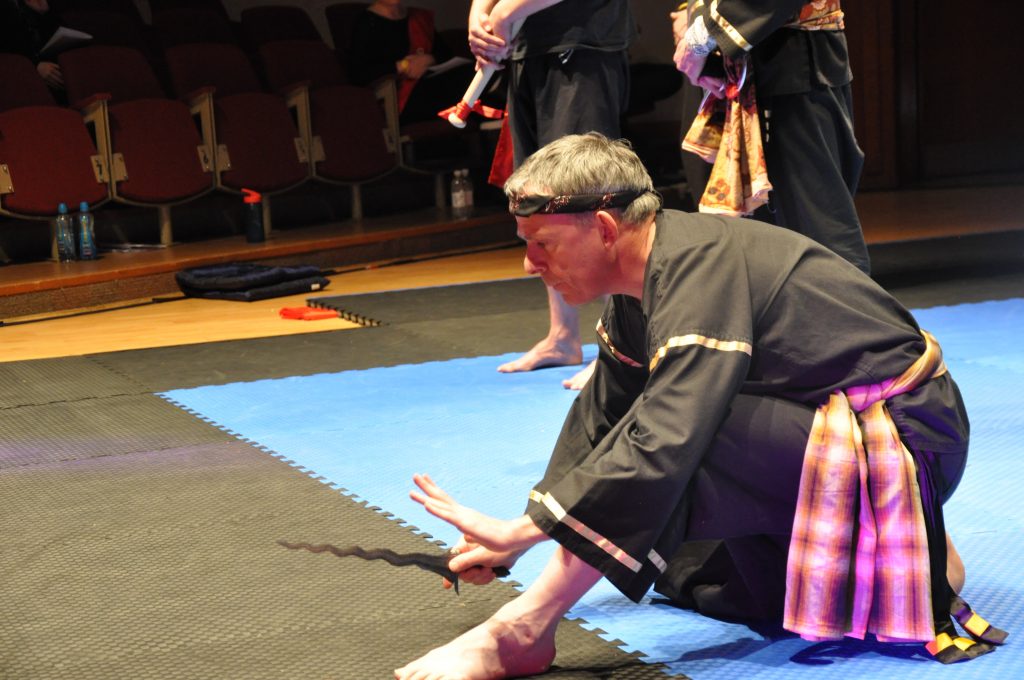
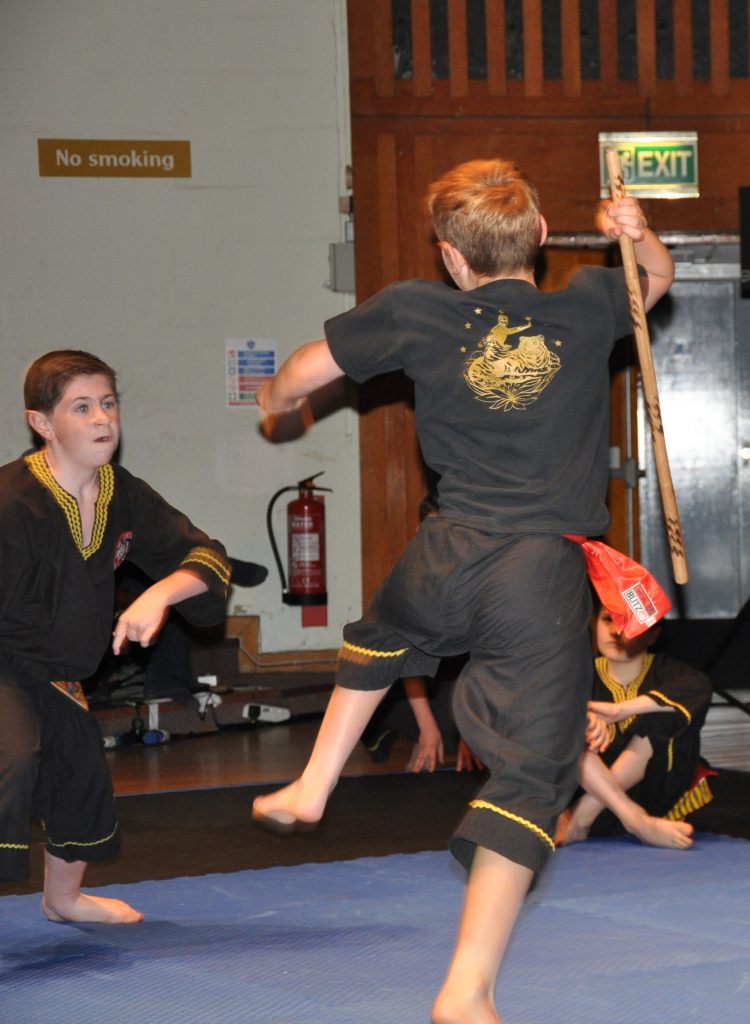
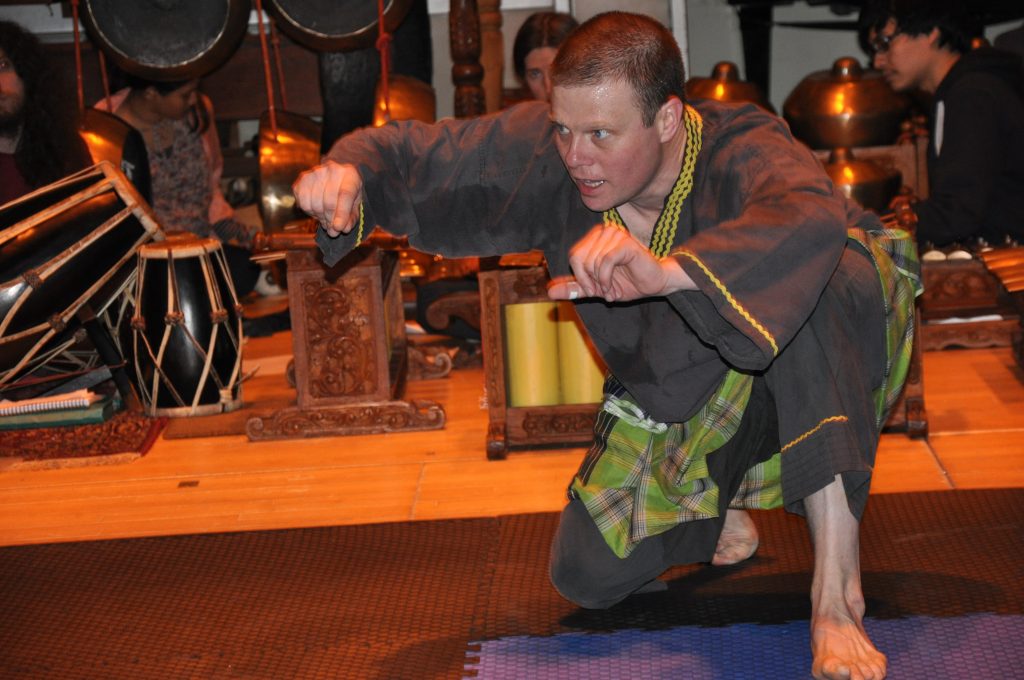
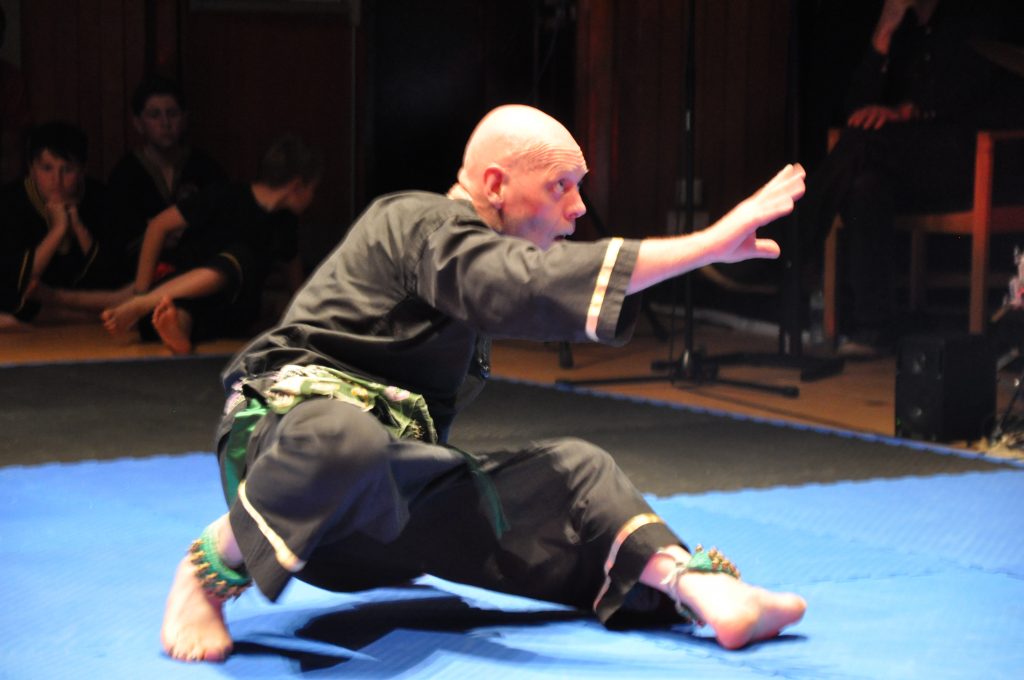
There are many styles of Silat to be found in Indonesia and Malaysia. We study several varieties and there will be influences from Setia Hati (Java) Lumpat Harimau (a mixed style), (Harimau Berantai (Malaysia) and Silek Tuo (Western Sumatra) in what you see. Many styles of Silat have been deeply influenced or originate from the Minangkabau people of West Sumatra and you will see our effort to portray the movements so characteristic of their arts. The low deep postures, and the gelek or twisting movements that generate power and help in evasion have an elegance and effectiveness that is hard to acquire.
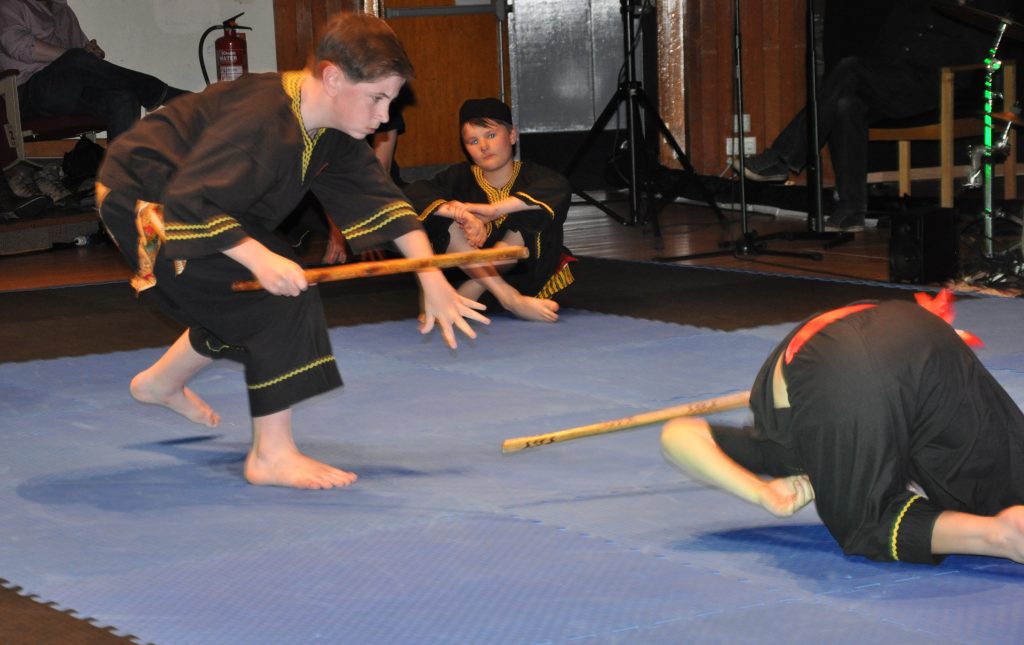
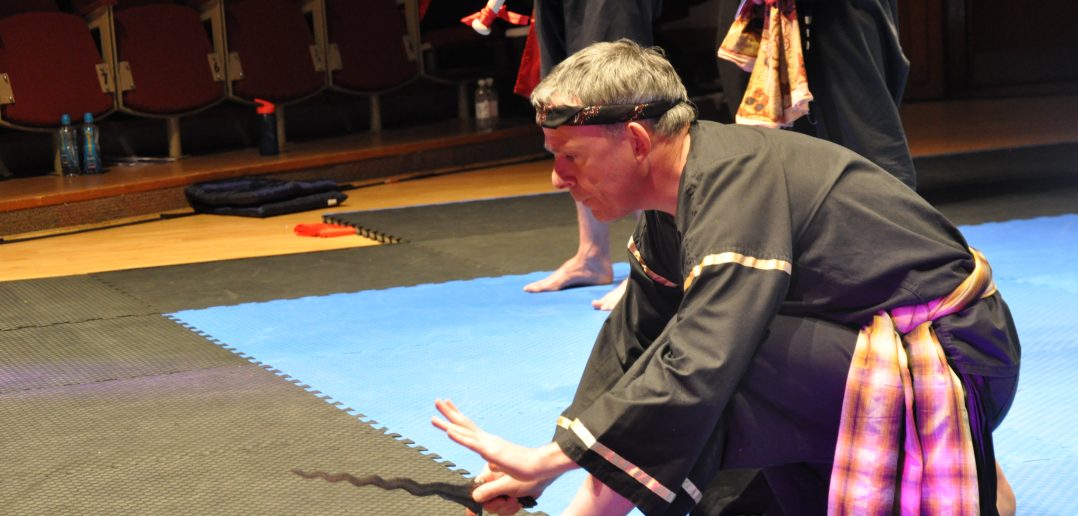
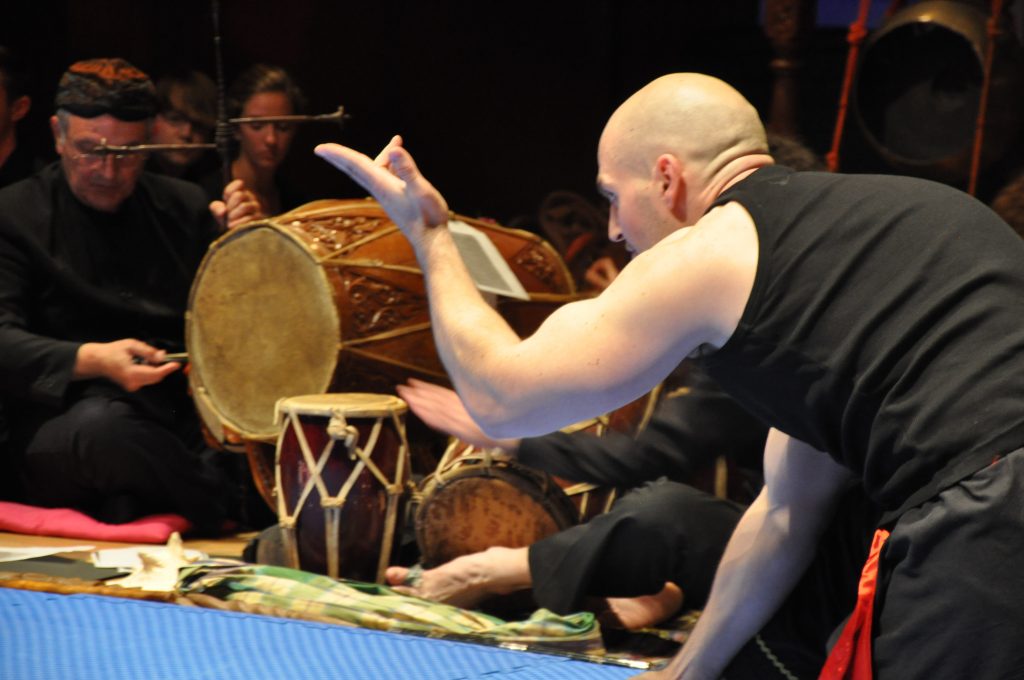
The fight scenes are a mix of choreographed movement and spontaneous free expression. The choreographed or preset movements that you will see fall into two categories – either a form or sequence belonging to one of the particular styles mentioned above, or created by the silat practitioners themselves. Everyone in the group has made a contribution to this and attempted to express something of themselves, their tradition and the character that they are portraying. The spontaneous free movement is something akin to light contact sparring bagaluik -where the outcome of any movement or position is uncertain. Effectiveness, elegance, embodiment and transformation of natural and primal energies are sought for in movement and in the encounter with ones opponent/partner.
Traditional weapons of Indonesia that you will see include the keris, kerambit and sarong. The gada (Sanskrit) or gedak (Malay) is a mace like club that Bhima and Duryodhana were said to be masters of. It is found in silat and many other martial traditions.
Mark Young