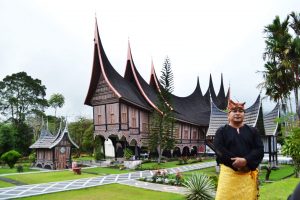

Silek Tuo translates literally as old Silek. It is the traditional martial art of the Minangkabau people whose homelands are in Western Sumatra. Silek is the Minang word for silat and Penjak Silat the group of arts that are found in Indonesia, Malaysia and known throughout South East Asia.
The history of the Minangkabau and the origins of Silek are ancient and predate modern historical records. The Tambo or ancient histories of the Minangkabau are as all ancient histories, a mix of fact and legend. Mythology is almost always important because it contains coded information and usually has some basis in fact. One key account traces Sileks early beginnings to Sultan Maharajo Dirajo reputed to be a descendant of Iskander Zulkarnain, Alexander the Great and associated with the area Padang Panjang. His four followers were all skilled in the arts of war and contributed to the development of Silek.
Kuciang Siam – Siamese cat (Thailand) Harimau Campo – Tiger (Vietnam)
Anjiang Mualim – Dog (Persia/India) Kambiang Hutan – Goat (Cambodia)
Every fighting art is an expression of the culture it is derived from. The Minangkabau are an old and rich matrilineal culture that has retained and developed a particular identity whilst being exposed to and influenced by a wide range of ideas, philosophies and fighting methods. Indonesia and Sumatra have historically been exposed to influences from India, China, Persia and the West. There is a cultural, philosophical, scientific and religious base to Silek which is rich and diverse.
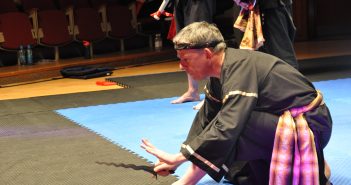
From a more practical perspective Silek Tuo contains strikes, locks, throws and is renowned for its low postures and developing the capacity to move quickly and powerfully on the ground for takedowns and grappling. Some silek styles begin training from the ground up. The movements of the art are characterised by ‘gelek’ which does not have a satisfactory English translation but includes the ideas of twisting, coiling, spiralling and evading. Gelek is visible in the larger movements and in striking but also internal and subtle in the smaller movements during grappling.
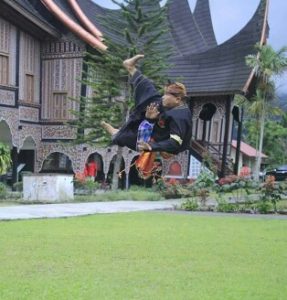
A second key feature of Silek Tuo is that of ‘following the energy’. This works on many levels but highlights the capacity to move with the flow of energy that is inherent in every situation. Training with a partner/opponent is given emphasis in order to increase sensitivity and to develop counters and strategies for every situation. As one advances, emphasis moves increasingly toward freestyle forms of sparring with your partner/opponent (bagaluik).
There are many styles of Silek Tuo, often associated with a particular area, clan or teacher so there is no one way of training. An image that is often used is that of the tree, there are roots in the earth and a central trunk growing up toward the light, branches, leaves and fruit. From the induak-induak (mother) comes the central forms which give rise to the variations, the pecahan or pieces.
Good body mechanics and strong form/postures (tagak), footwork (langkah) flowing spiralling movement (gelek) at all ranges and levels and flexibility and strength are worked on to accustom the body to the twisting movements and change from upright to ground. Key weapons are knife (pisau) curved and straight, kerambit, tongkat (stick) and sarong.
In acknowledgement to Edwardo Guci of Silek Tuo Pagu Pagu for his instruction and education not only in his own style of Silek Tuo but enabling me to experience and see many other styles.